- Lead News
- National
Employment Exchange’ to Be Introduced at the District Level: Mahdi Amin
- লিড নিউজ
- National
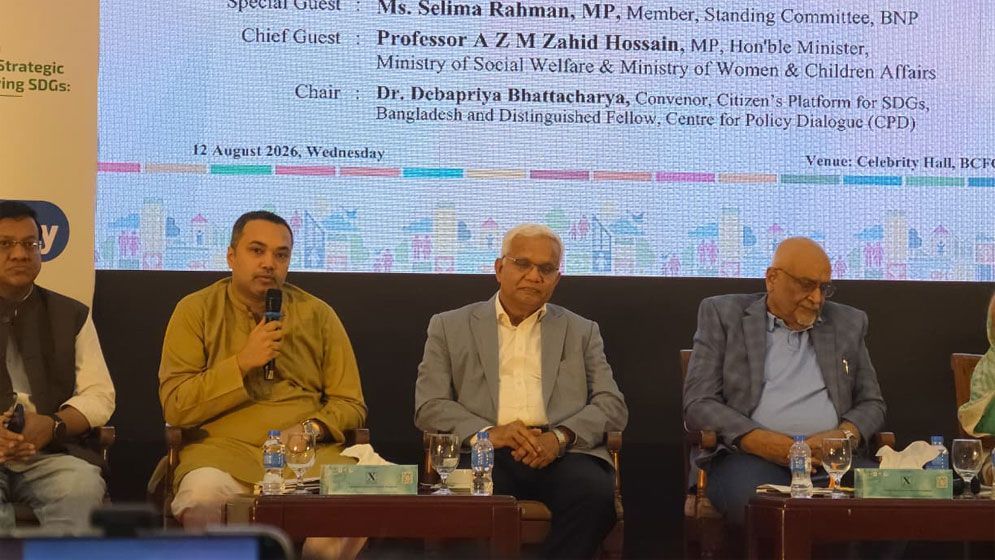
Photo: Collected
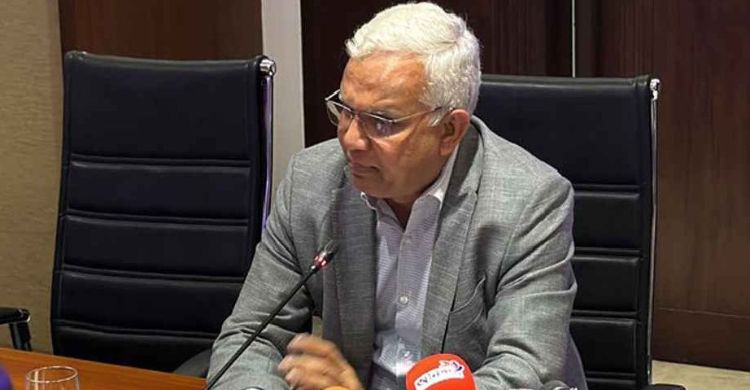
News Desk: Prime Minister’s Adviser and spokesperson for the Prime Minister’s Office, Mahdi Amin, said that an “Employment Exchange” will be introduced at the district level, with priority given to disadvantaged and underserved communities.
He said, “At the initial stage, we are going to launch the Employment Exchange. Several dialogues and consultations have already been held among different government agencies regarding the initiative. Although we have a Ministry of Labour and Employment, there has not previously been a dedicated structure that directly focuses on employment generation and coordination. Our main objective is to establish a direct connection between the demand for and supply of employment through this Employment Exchange.”
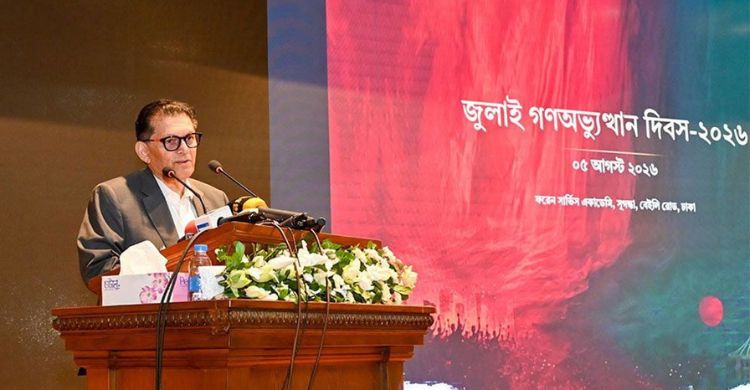
Mahdi Amin made the remarks on Wednesday afternoon during the second session of the national conference titled “Implementation of a Five-Year Strategic Framework for Achieving the SDGs: Policy, Partnership and Priorities,” held at the Bangladesh-China Friendship Conference Centre in the capital.
Regarding the launch of the Employment Exchange, the Prime Minister’s Adviser further said that the initiative would reach the district level directly, bringing together local employers and job seekers—those who create employment opportunities and those looking for jobs. Both offline and online platforms would be used to create new employment opportunities for them.
He said the initiative would also involve developing necessary technical skills, capacity building, and establishing an effective referral system. The private sector would be directly involved in strengthening institutional skills and qualifications. The initiative will initially be launched at the divisional level and subsequently expanded to every district across the country.
Regarding benefits for disadvantaged and marginalized communities, Mahdi Amin said the government was giving the highest priority to ensuring that no citizen is left behind in the country’s economic growth and development. He said the government’s primary objective is to fully integrate disadvantaged people into the mainstream of the national economy and social protection system.
The second session of the conference focused on inclusive development, reform, the Five-Year Strategic Framework for Development (July 2026–June 2031), and the Sustainable Development Goals (SDGs).
Mahdi Amin said the government was committed to ensuring inclusive development by improving the overall well-being of people from all professions and social groups and by providing sustainable solutions to citizens’ problems. He also said that administrative accountability and responsibility had been strengthened following the assumption of office by a democratically elected government through direct public voting after a long period.
He noted that the government received its mandate based on the direct political views and voting rights of people from every level of society. He said citizens from all sections of society had made significant contributions to the government’s electoral victory. Therefore, ensuring the social, political, economic, and family empowerment of every citizen is a core objective of the current government.
He said the government was working to establish an administrative structure that would not merely provide temporary development but would permanently address citizens’ problems while also improving their economic and social well-being. He added that the government would continue working toward building an inclusive state based on accountability.
Highlighting positive aspects of the government’s first budget, Mahdi Amin said that, under the Prime Minister’s directive, taxes and VAT on more than seven essential commodities—including rice, lentils, edible oil, sugar, and flour—had been reduced to ensure the economic empowerment of people at the grassroots level. As a result, he claimed, no unscrupulous syndicate had been able to create an artificial shortage in the market.
He further said that despite rising global fuel prices, the government had kept domestic fuel prices under control through strict management so that low-income and working-class people could remain economically comfortable.
Mahdi Amin said a temporary disruption in gas supplies had recently occurred after an FSRU (Floating Storage and Regasification Unit) became technically inoperative, but effective measures were being taken to resolve the situation.
He said the energy sector was facing major challenges because of accumulated administrative and infrastructural problems over the past 16 years. Such long-standing structural problems could not realistically be resolved completely within just five or six months. However, he expressed optimism that, under the Prime Minister’s clear directives, relevant officials and stakeholders were working jointly to increase foreign direct investment (FDI) in the sector.
At the same time, he said maximum efforts were being made to extract the country’s own natural resources. He expressed hope that effective measures would provide a sustainable and realistic solution to the energy crisis in the medium term.
Mahdi Amin pledged to build a new Bangladesh free from inequality through increased domestic and foreign investment, large-scale employment generation, and major reforms in the education and healthcare sectors. He announced that 100,000 new positions would soon be created and filled in the healthcare sector, with women receiving priority for 80,000 of those positions.
The spokesperson for the Prime Minister’s Office said the government’s first budget was highly business- and investment-friendly. Regarding fundamental reforms in the education system, he said students would be developed not only through institutional qualifications but also through practical skills and social values so that they could become successful entrepreneurs and skilled workers.
Speaking about future initiatives of the Ministry of Education, he said midday meals and uniform systems would gradually be introduced in all primary and secondary schools. Digital equity would also be established in education so that the teaching methods and resources available through advanced multimedia classrooms in urban areas could reach rural schools as well. At the same time, teacher training and enhancing the dignity of teachers would receive the highest priority.
Pledging to reduce disparities in facilities between urban and rural areas through universal initiatives such as tree plantation and canal excavation for water-resource management, Mahdi Amin called on people from all political affiliations, religions, and social backgrounds to work together to build a prosperous Bangladesh.
Also present at the event were Minister for Women and Children Affairs and Social Welfare Professor Dr. A.Z.M. Zahid Hossain, CPD Distinguished Fellow Debapriya Bhattacharya, BNP Standing Committee member and Member of Parliament Begum Selima Rahman, Member of Parliament Madhabi Marma, and others.
Government Will Not Engage in Any Form of Misinformation:...
1
News Desk: Government Will Not Engage in Any ...

Major Reshuffle in Top Police Positions
2
News Desk: A major reshuffle has been made in the ...
There are 128.6 million voters in the country, up by 300,...
3
News Desk: Senior Secretary of the Election Commis...
Prime Minister: Do not disrupt peace and order by making ...
4
News Desk: Prime Minister Tareque Rahman said that...
Prime Minister embraces Hefazat-e-Islam Chief
5
News Desk: Upon arriving in Fatikchhari, Chattogra...



মন্তব্য (0)