
- Lead News
- Health
12 Guidelines from Directorate General of Health Services for Treatment of Dengue Patients
- লিড নিউজ
- Health
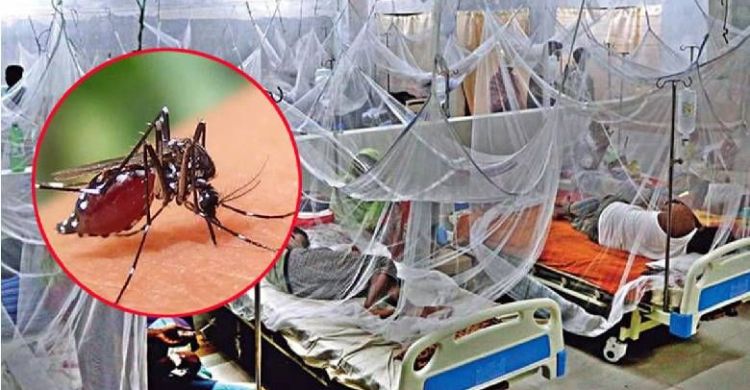
File Photo
News Desk: The Directorate General of Health Services (DGHS) has issued new directives to government hospitals to ensure more organized treatment for Dengue patients.
On Tuesday, these directives were sent to the directors of all medical colleges and specialized hospitals, the superintendents of district headquarters hospitals, civil surgeons, and upazila health and family planning officers across the country.
According to the directives, all hospitals must immediately establish dedicated wards for dengue treatment and form a specialized medical team. The DGHS believes that this initiative will improve patient care, reduce health risks, and enhance the overall quality of hospital treatment.
In the directive signed by Dr. Abu Hossain Md. Moinul Ahsan, Director of Hospitals and Clinics at the DGHS, it was stated that hospitals must ensure special arrangements for admitted dengue patients. In particular, facilities for NS1 testing, emergency treatment, and adequate medicine supplies must be in place. Admitted patients should be kept in designated wards or rooms, and priority must be given if ICU support is required. Additionally, specific responsibilities have been assigned to doctors and nurses.
The directive also stated that a medical board comprising medicine, pediatric, and other specialists must be formed to treat dengue and Chikungunya patients. Under the supervision of this board, medical officers, resident doctors, and trained physicians will exclusively treat these patients. Suspected patients arriving at outpatient departments will also be treated in a designated room by the same board and doctors.
Furthermore, hospital directors must send official letters to the respective city corporations or municipalities to conduct mosquito eradication and cleanliness drives around the hospital premises. It has also been instructed that a dengue coordination meeting be held every Saturday at 10 a.m., chaired by the hospital director, superintendent, and civil surgeon.
Experts believe that such directives will not only improve the quality of hospital care but also help reduce risks for both patients and their families. If the treatment process becomes more organized and coordinated, the mortality rate among patients may also decrease.
Dengue poses a major public health challenge in Bangladesh every monsoon season. According to DGHS data, the number of dengue cases has already increased in the capital and other cities during the 2025 monsoon. Although hospitals are not yet overwhelmed, experts warn that without proper treatment and preventive measures, the situation could quickly spiral out of control.
Government is following a zero-tolerance policy in the he...
1
News Desk: Minister for Health and Family Welfare Sarder Md. Sakhawat Hossai...
Global Health Summit 2026 Highlighted the Role of NRB Sci...
2
Staff Correspondent: The Global Health Summit 2026, a landma...
Government to Recruit 100,000 Health Workers and 25,000 M...
3
Dhaka, June 21 (CNI): The government will recruit 100,000 new health ...
12 more children died of measles and symptoms, total deat...
4
News Desk : 12 more children died of measles and m...
Standard Finis Oil Co. Successfully Completes CSR Activit...
5
Staff Correspondent: Bangladesh is currently facing a surge ...



মন্তব্য (0)