






- Health
Unprecedented Integration of Technology in Sweden’s Healthcare: What Can Bangladesh Learn?
- Health
Feature Photo
News Desk:
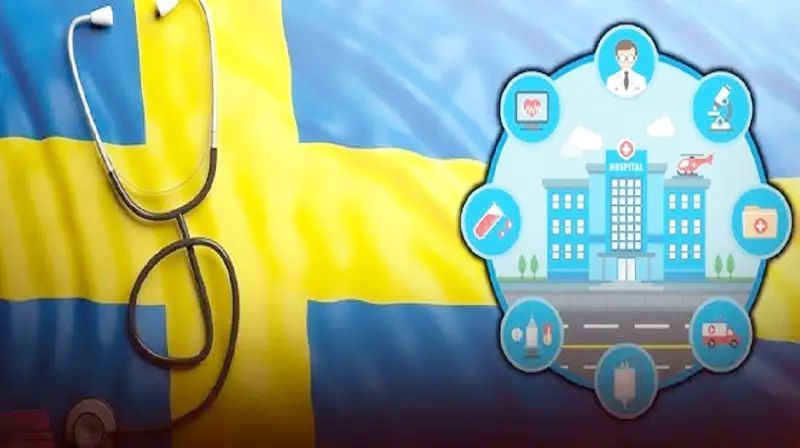
Sweden's healthcare system is marked by a well-organized structure and advanced technological integration at every stage—from primary care to emergency services. Healthcare in Sweden is not solely dependent on physicians; rather, each step is effectively and transparently managed with the support of digital platforms and artificial intelligence (AI).
System-Based Approach in Registration and Diagnosis
Typically, every Swedish citizen is registered with their local healthcare center. When in need of medical attention, patients first contact a nurse via phone, online chat, or a dedicated app. The nurse listens to the symptoms and determines the necessary course of action—whether the patient should be referred to a specialist or sent directly to the emergency department.
Central Database and AI-Based Diagnosis
Sweden’s healthcare operates under a centrally regulated system. No matter where a patient is in the country, their medical history, prescriptions, and lab reports are accessible on a single digital platform. This allows doctors to easily review prior records and make informed decisions.
At the preliminary stage of diagnosis, the use of AI has made the process faster and more accurate. When a patient enters their symptoms online, an AI chatbot analyzes them and quickly generates a list of possible conditions. Based on this, the patient is referred to the appropriate medical facility.
Fast Emergency Services
In emergencies, Sweden offers 24/7 access to ambulance or air ambulance services through a dedicated helpline. Patients can also receive services directly by visiting reception desks or by booking appointments through official channels in advance.
A Horizon of Possibilities for Bangladesh
According to the director of a Swedish medical center, Bangladesh has much to learn from Sweden’s experience. If Bangladesh could store patients' medical histories, prescriptions, and lab reports on an integrated digital platform, the margin for misdiagnosis could be reduced to nearly zero.
He remarked,
"Many hospitals in Bangladesh already have digital journal systems, but they are still fragmented. If both public and private hospitals could be brought under a unified internet-based server system, it would be a tremendous benefit for patients, doctors, and the overall healthcare system."
The Rise and Future of AI
The use of artificial intelligence in Sweden’s healthcare is steadily increasing. In addition to chatbot-based initial diagnostics, analytics and machine learning are making analytical treatment planning easier. Experts believe that as this technology advances, it will bring remarkable changes at every step—from diagnosis to treatment planning.

Government is following a zero-tolerance policy in the he...
1
News Desk: Minister for Health and Family Welfare Sarder Md. Sakhawat Hossai...

Global Health Summit 2026 Highlighted the Role of NRB Sci...
2
Staff Correspondent: The Global Health Summit 2026, a landma...
Government to Recruit 100,000 Health Workers and 25,000 M...
3
Dhaka, June 21 (CNI): The government will recruit 100,000 new health ...
12 more children died of measles and symptoms, total deat...
4
News Desk : 12 more children died of measles and m...
Standard Finis Oil Co. Successfully Completes CSR Activit...
5
Staff Correspondent: Bangladesh is currently facing a surge ...



মন্তব্য (0)