





- Lead News
- Financial
Government Shifting Focus to Alternative Financing to Reduce Reliance on Banks: Finance Minister
- লিড নিউজ
- Financial
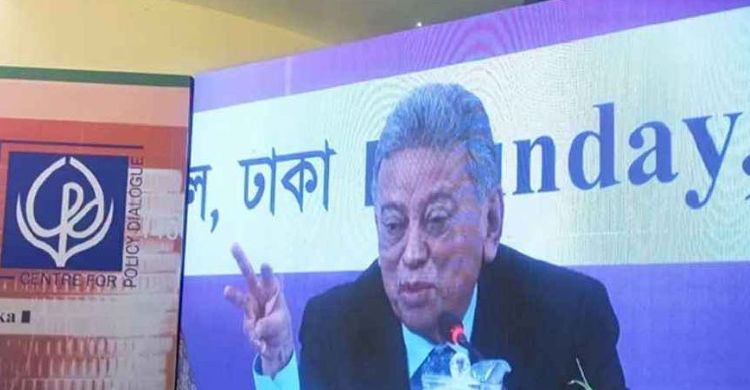
Photo: Collected
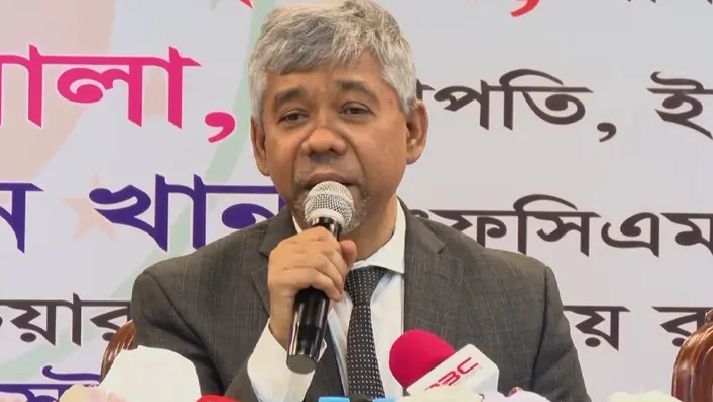
Dhaka, June 21 (CNI): Finance and Planning Minister Amir Khasru Mahmud Chowdhury has said that the government is moving towards alternative financing mechanisms as part of broader reforms to the country's public financing framework, aiming to reduce dependence on local banks.
He said excessive government borrowing from domestic banks at high interest rates hampers private sector investment. “We have taken initiatives in the budgets for fiscal years 2025–26 and 2026–27 to reduce our reliance on bank borrowing,” he said.
The minister made the remarks on Sunday while addressing a budget review dialogue organized by the private think tank Centre for Policy Dialogue (CPD) at Lakeshore Hotel in Gulshan, Dhaka. CPD Executive Director Fahmida Khatun presented the keynote paper at the event.
Amir Khasru noted that for the past decade he has consistently argued against excessive government borrowing from local banks. “When the government borrows at interest rates ranging from 10 to 13 percent, it becomes difficult for the private sector to survive. It also raises serious questions about how the government will repay such expensive loans,” he said. “Therefore, we are gradually reducing our dependence on banks and focusing on market-based and alternative sources of financing.”
Discussing budget preparation and existing challenges, the minister said the current budget had to be prepared within only one and a half months, whereas the process usually takes about six months. He added that the government inherited a significant amount of unpaid liabilities from the previous administration, including around Tk 5 billion in outstanding electricity bills.
The finance minister said that approximately Tk 1.25 trillion from the current budget will be spent on debt servicing and interest payments, which is significantly reducing the government's fiscal space.
Emphasizing direct support for beneficiaries of social safety net programs and family card schemes, he said the government is working to ensure that financial assistance reaches the accounts of homemakers or eligible family members directly, without intermediaries. He noted that the family card program recognizes the contribution of women engaged in household work. “This is not merely financial assistance; it also helps strengthen social resilience and support family stability,” he said.
He added that efforts are also underway to ensure direct support for persons with disabilities and farmers in order to strengthen food security.
Regarding investment in education and healthcare, the minister said that despite existing limitations, the government has allocated 2 percent of GDP to the education sector, with a long-term goal of increasing it to 5 percent. He stressed that improving the quality of education and healthcare is essential for utilizing the country's demographic dividend.
Particular emphasis is being placed on skill development, reskilling, and upskilling to build a competitive workforce. He also said the government is prioritizing preventive healthcare measures to reduce medical expenses for ordinary citizens.
Among those participating in the dialogue were Hossain Zillur Rahman, Executive Chairman of the Power and Participation Research Centre (PPRC); M.A. Razzaque, Chairman of Research and Policy Integration for Development (RAPID); Anwar-ul-Alam Chowdhury Parvez, President of the Bangladesh Chamber of Industries (BCI); Enamul Haque Khan, Senior Vice-President of BGMEA; and Montu Ghosh, President of the Garments Workers Trade Union Centre.
– CNI News
Banks to remain open on Saturday in four districts
1
News Desk: Bangladesh Bank has instructed bank branches and sub-branches adj...

40 Million Litres of Edible Oil, 22,500 Tonnes of Lentils...
2
News Desk: The government has approved the purchase of 40 million litres of e...

A big jump in the price of gold in the country
3
News Desk: After declining in two consecutive adjustments, the price of gold ...

JBCCI Welcomes FY2026-27 Budget, Calls for Effective Impl...
4
Staff Correspondent: The Japan-Bangladesh Chamber of Commerc...
The tax system will be further simplified to create a bus...
5
News Desk: National Board of Revenue (NBR) Chairman Md. Abdur Rahman Khan has said that initia...



মন্তব্য (0)